

I’ve walked this road twice. The second time around I was expecting a smooth transition… and ended up getting daycare calls after an hour every day. Here are the 5 biggest challenges no one warned me about, but I wish they had:
1. Your baby might not settle into daycare (and you still have to go to work)
My first baby, Ollie, began daycare at 7 months old. We did a couple of stay and plays leading up to his start date, and then on his first day, I dropped him off with the intention of picking him up 90 minutes later. Turns out Ollie didn’t even notice I was gone, played happily, and was having a nap when I went back to get him. Because this was my first experience, surely number two would be just as smooth…
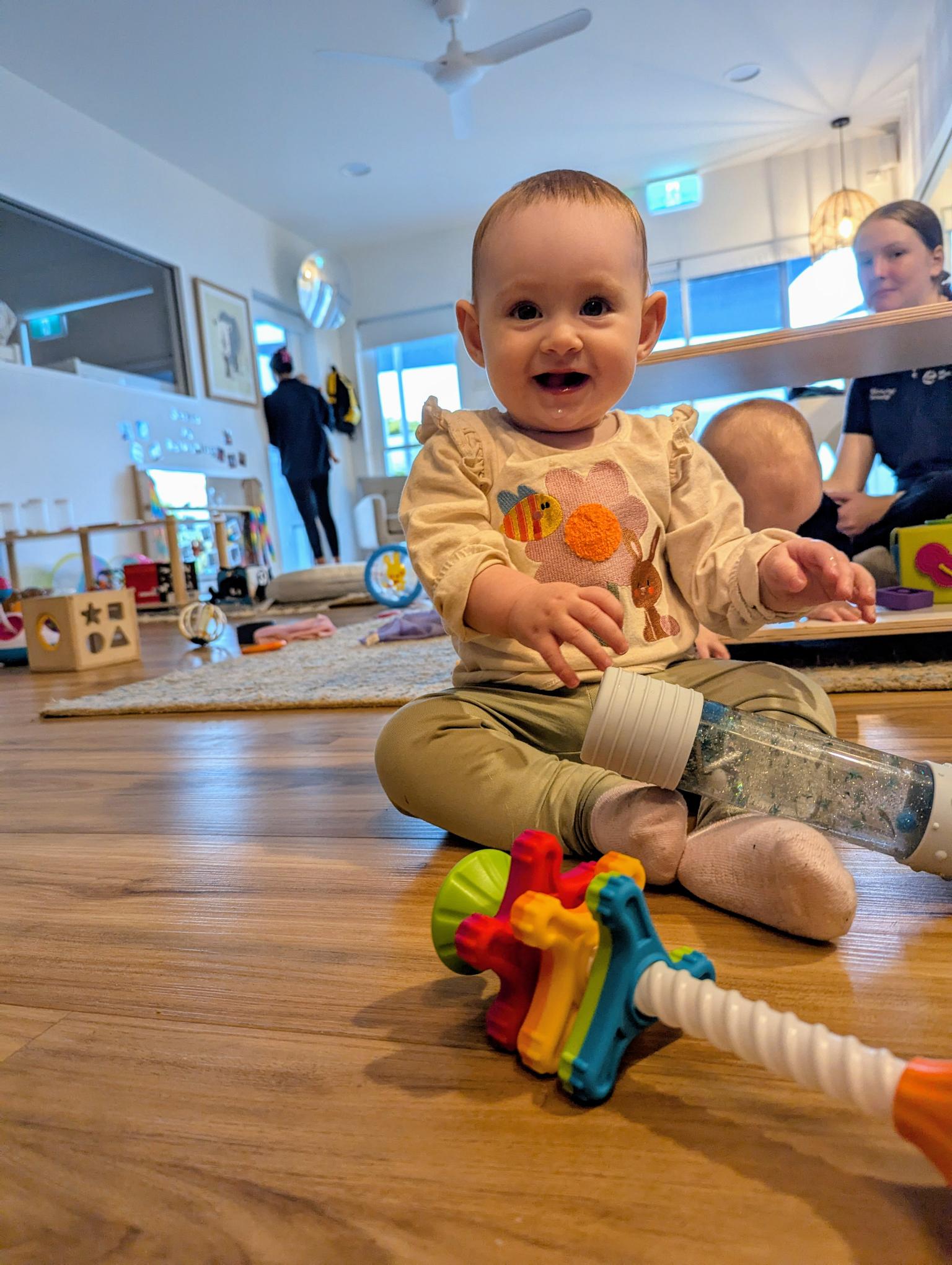
Nope. Ellie started daycare at 9 months old, and even during her 5 stay and plays, I couldn’t leave the room without her completely losing it. Her first day she lasted less than an hour. It took an entire month before she completed her first full day. I was on edge, trying to work as efficiently as possible before I got that phone call each day.
Leaving her screaming went against every instinct, it’s honestly one of the hardest things I’ve ever done and I still feel that mom guilt today when I think about it.
What I wish I’d done instead:
I wish I’d taken her for many more stay and plays or started her at daycare earlier. Even just a day a week for a month or so leading up to my return to work. That would have given her more flexible time to adjust, and would have made for a much less stressful transition back into work.
I wish I hadn’t used up all of my annual leave. I wanted to maximise my time off with Ellie, but if I’d kept some of my leave in reserve, when it became obvious that her transition wasn’t going as smoothly as I’d hoped, I could have used that extra leave to extend my transition back, easing the mental demand of trying to work full time with a baby that wasn’t coping with the change.
2. Keeping your baby on breast milk is a lot harder than you expect
Both of my babies were breastfed. Ollie had a bottle of pumped milk here and there, and Ellie completely refused bottles. We managed to get her to (unreliably) drink pumped milk from a B.Box bottle before she started, but it was touch and go. Because neither kid was consistently drinking bottles, I didn’t know how much milk they drank, and so I didn’t know how much they’d need to be sent with each day. I ended up sending what a quick google search told me should be enough, plus a couple extra bags for just in case.
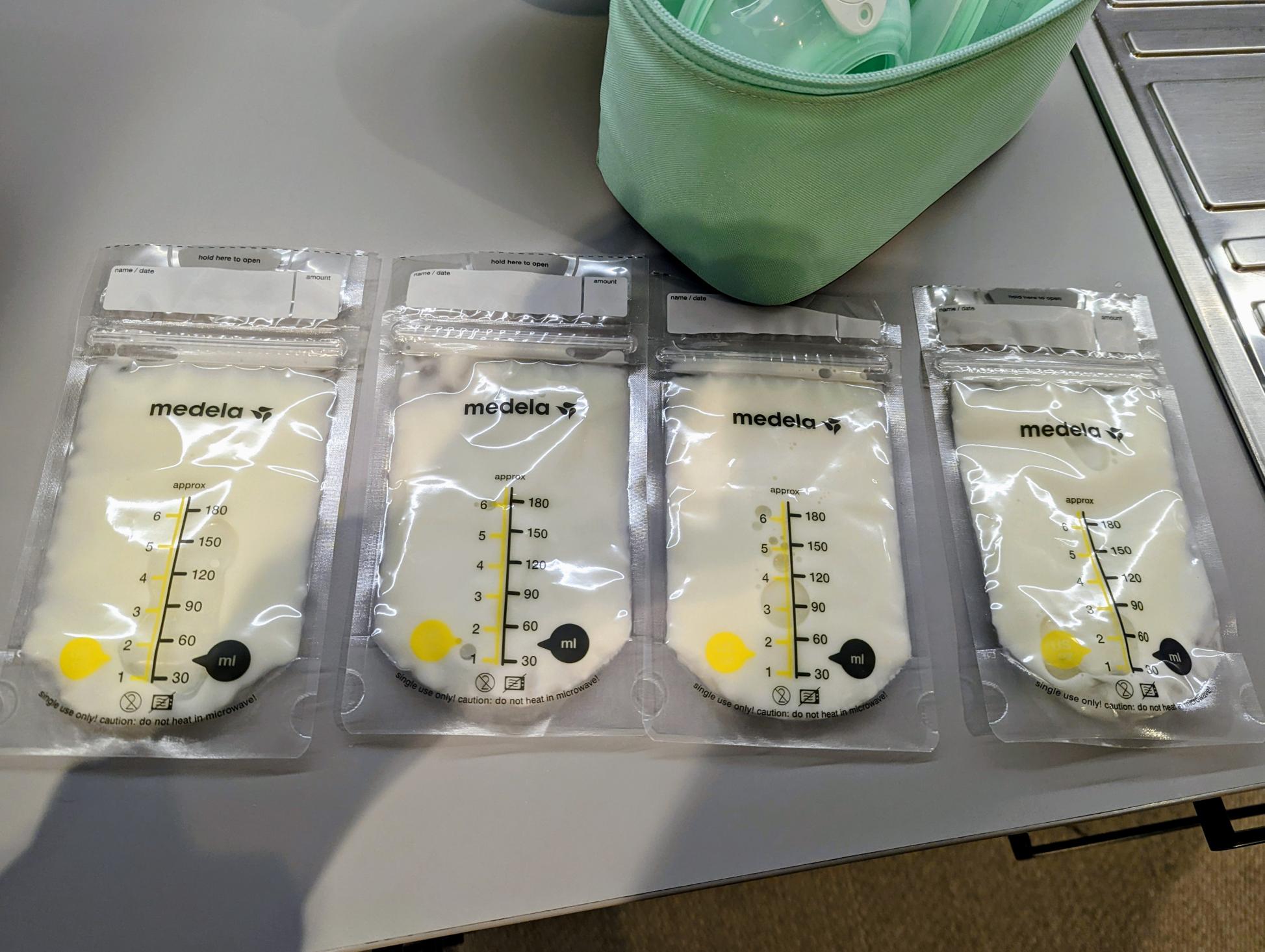
Pumping at work isn’t difficult, and honestly, can be a nice escape to sit alone in a quiet room. Pumping enough to keep up with your baby, on the other hand, can be a challenge. I knew the importance of consistent pumping for supply, so I blocked out time in my calendar as non-negotiable pumping time. When I soon realised I wasn’t pumping as much as Ollie was drinking, I upped my work pumping schedule to 4 times per day. I pumped on the drive to and from work, and twice in the office. When the day came that it was clear I wasn’t going to be able to keep up, Ollie was 11 months old and I was heartbroken. I remember crying on my way to work after dropping him off with a container of formula for the first time.
With Ellie, I went in expecting the same supply difficulty. I focused on curating meal plans with supply boosting ingredients, and while I managed to sustain her with only 1 pump per day, she began having formula at daycare at 11 months as well. Thankfully I was better emotionally prepared this time around.
What I wish I’d done instead:
I wish I’d started Ellie with bottles earlier. This speed bump in her transition was minor compared to some of the others, but knowing that my baby would happily drink her milk would have been a real comfort to me.
I wish I’d stressed less about my supply with Ollie. It was all consuming, and all that worrying didn’t actually amount to a better outcome, and it all likelihood, it hindered my supply. “Just don’t stress” is easier said than done, but I can tell you that this part of my journey was so much easier the second time around, despite having the same outcome.
3. The pressure to “bounce back” at work mostly comes from you

I felt the need to very quickly return to my normal, pre-baby, working capacity. After a two week part time transition, I was back to working 5 days per week, and I expected myself to be working at full capacity and kicking goals straight away. I didn’t account for Ellie’s terrible transition, or for the never ending daycare germs that saw me take so much carer’s leave that I was basically working part time. I said yes to every opportunity, like stepping into a temporary leadership role two weeks after returning, and pushed my mind and body to the limit trying to hold it all together.
When things finally slowed down and I stepped back into my normal position, my body gave out and I got really sick. I’d truly pushed myself too far. All this, despite everyone, leaders and team members alike, being incredibly understanding and supportive of my circumstances. I put all this pressure on myself, I held incredibly high expectations for what I should be able to achieve and then spiraled when things weren’t going to plan, but no one else was watching and judging.
What I wish I’d done instead:
I wish I’d started slower, really looked around and understood how supportive the leaders and team members around me are, and been softer on myself. I pushed myself too hard. It felt like I needed to at the time, but looking back, I didn’t.
4. The logistics are relentless
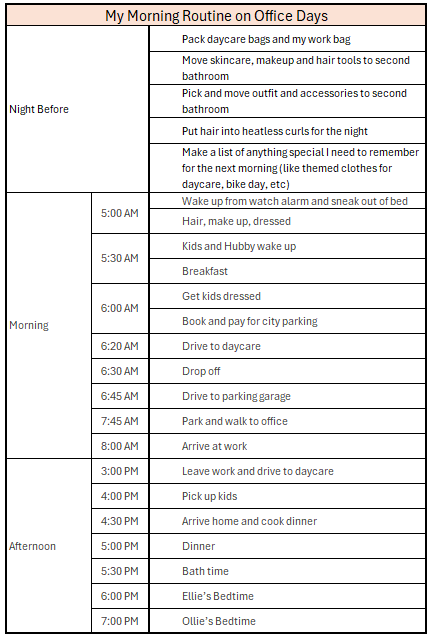
It’s taken a lot of trial and error to establish the well-oiled machine that is my routine on office days, and even at that, there’s no room for error. I’m happy to have refined it to a routine that works for my family, because when I was winging it and hoping for the best, everyone was feeling rushed in the morning, and I was almost always walking into the office behind schedule. Now, mornings are more routine, cortisol is lower, and I’m on time every day. Thankfully I also work for an understanding and flexible company, so I’m able to work from home some of the week, and I can make up the extra time that I lose on office days.
What does my schedule look like on office days? Well, it starts the night before:
What I wish I’d done instead:
I wish I started preparing everything I could the night before earlier. This was a real game changer and takes a lot of the mental load out of the mornings.
5. The little things no one warns you about (and they aren’t all bad)

And then there’s the random little things that really took me by surprise, like when you pick your baby up from daycare and they don’t smell like themselves anymore. That one really threw me. After a few weeks I realised I basically Pavolv’d myself into loving the spell of daycare, because that meant I’m about to see my baby.
Then there’s the excitement when your phone notifies you that daycare has posted photos of your baby. Or the fact that after only a week I felt like I had stepped back into my professional persona and was back into the swing of things with work. I was amazed at how refreshing it is to be your own person again, able to go to the bathroom or eat lunch without a baby screaming, and how empowering it is to be able to focus on a task and feel productive.
Here’s What I Learned
Preparation:
- Do more stay and plays than you think you need. Seriously. It’ll make the transition easier for everyone, baby, you, and the educators.
- Try to get baby comfortable eating and sleeping at daycare before you go back to work.
- Keep some annual leave in reserve, just in case.
Work Boundaries:
- Have an early conversation with your manager about:
- Pumping requirements
- Travel expectations
- Work hours
Routine Survival:
- Prep everything the night before
- Create a repeatable routine
- Use lists to avoid mental overload
Mindset:
- Your priorities will shift, and that’s normal
- You’ll get back into work faster than you think
- You don’t need to operate at 100% immediately
You’ve Got This
Well mama, that’s my experience, messy, emotional, and not always what I expected. Some parts will feel harder than you thought, and some will surprise you in a good way
However it looks for you, I hope you can give yourself some grace while you find your way through it.
xx Laura


